Why finishing Sharks 3 matters — the skills that could save a life
At Happy Tiddlers, we often hear parents say: “My child can already swim — do they really need to finish Sharks 3?” Our answer is always the same: absolutely, yes. And sadly, recent events have shown just how important that is.
Over the past few weeks, several people have tragically lost their lives after getting into difficulty in open water during the hot weather. The heartbreaking truth is that many of them could swim.
What they often lacked wasn't the ability to move through the water — it was the knowledge, confidence and understanding of how to stay safe around it.
Open water holds dangers a pool never does: cold water shock, hidden currents, sudden changes in depth, exhaustion and panic can overwhelm even a strong swimmer in seconds. Knowing how to spot the risks, stay calm, conserve energy and make safe choices can matter just as much as being able to swim.
Why water safety is personal to us
This isn't just a policy for us — it's personal. When our founder Helen was 11, she had a near-drowning experience. It happened in a swimming pool, not open water, and it stayed with her for life.
What makes it so telling is that Helen was already a strong, confident swimmer. And yet she still found herself in real difficulty. That day taught her a lesson she's never forgotten: being able to swim and being safe in the water are not the same thing.
For years afterwards she avoided going out of her depth, and the sea was out of the question entirely. The confidence she'd always had around water disappeared almost overnight.
When Helen had her son, she was determined he'd be safe around water, so she enrolled him in lessons. Watching him learn reminded her how much she loved the water — and rekindled her own confidence and passion. More than that, it cemented a belief that shapes everything we do: every child deserves not just to learn to swim, but to build a genuine love and respect for water, and the awareness to stay safe in it.
The risk of stopping lessons too early
One of the biggest dangers in swimming is the gap between confidence and actual ability. A child can look confident in the water but still be missing the skills that keep them safe:
- Stamina to keep going over a distance
- Reliable breathing control
- Survival and self-rescue skills
- True awareness of risk around water
Children who stop too early may tire quickly, panic if they can't stand, or overestimate what they can really do. Swimming a length simply isn't the same as being safe around water — real competence comes from knowing how to react when things don't go to plan.
Our Sharks pathway — more than “just another badge”
Our Sharks programme follows the STA Learn to Swim pathway and is designed to grow children into safe, confident and capable swimmers, one gentle step at a time.
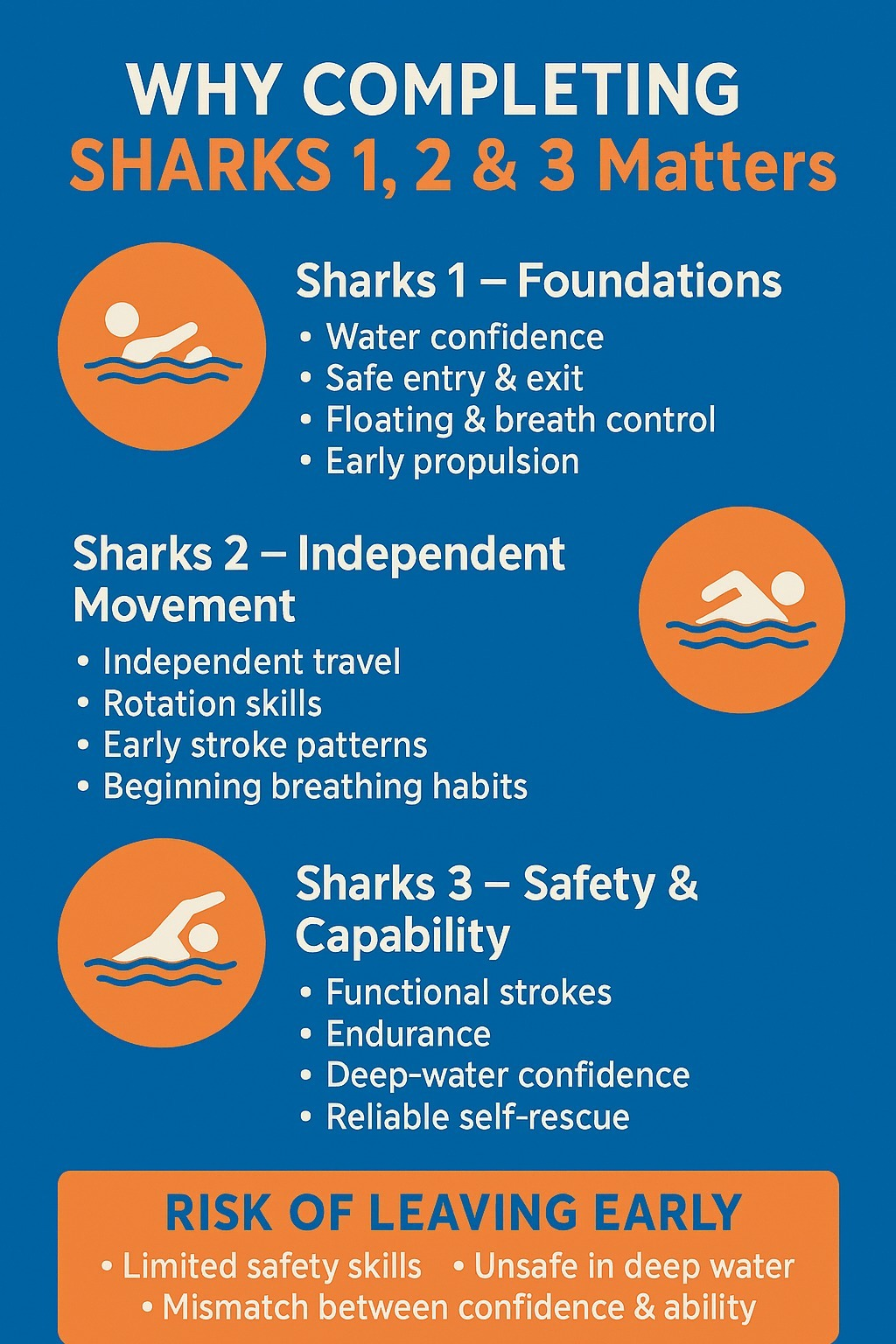
Sharks 1 — Building confidence & foundations
Water confidence, safe entries and exits, floating and breath control, and early propulsion skills.
Sharks 2 — Developing independence
Independent travel through the water, rotation skills, early stroke patterns and better breathing habits.
Sharks 3 — Developing safety & capability
Greater stamina, stronger technique, water safety and survival skills, and real independence.
Why finishing Sharks 3 is so important
Sharks 3 is a major milestone — and completing it means so much more than a certificate. It's where children learn the skills that could one day save their life.
Learning to tread water
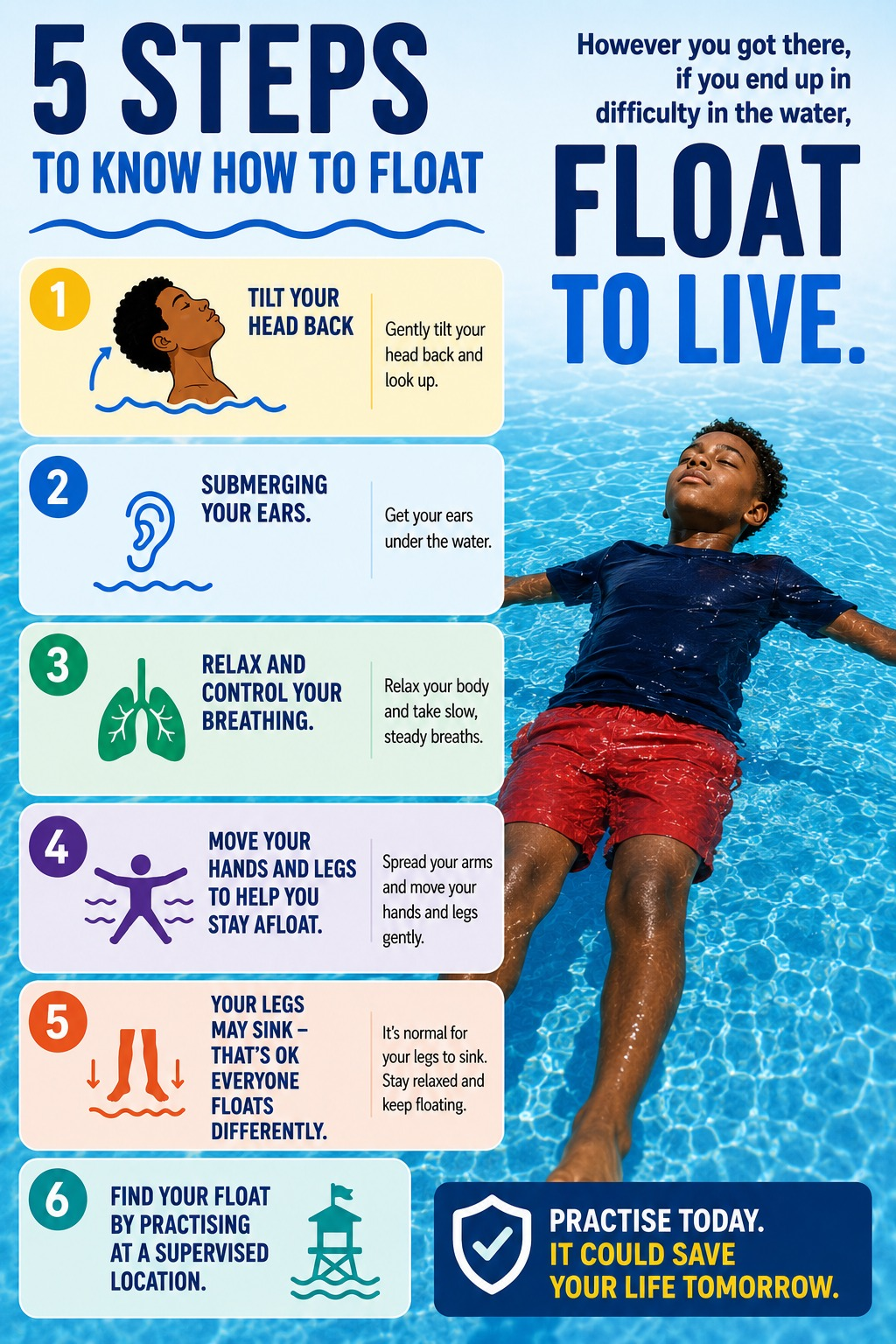
Staying afloat calmly, without constantly swimming, is one of the most important safety skills a child can have — helping them stay calm, conserve energy and stay safe.
Confidence out of their depth
Many children feel confident only when they can stand. Even though most can touch the bottom of our pool, we gently encourage them to keep swimming — building real confidence, stamina and independence.
Early lifesaving skills
Children learn controlled floating and lifesaving-style movements that help them conserve energy and stay safer in the water.
Building stamina
Swimming a few metres is very different from swimming safely over a distance. Sharks 3 develops the endurance of a genuinely capable swimmer.
And nothing beats the feeling of graduating from Happy Tiddlers having completed every award — celebrating not just swimming ability, but the confidence, resilience and life skills built along the way.
Because for us, swimming was never just a hobby. It's a love and respect for water, and a life skill that could one day save your life. Our goal isn't simply to teach children to swim — it's to help them be confident, capable and safe around water, for life.
Comments (0)
Be the first to comment on this post.